Home › Restaurants, pubs and small hotels › Staff, rotas and tips
Staff, rotas and tips
Hiring a 16 to 20 year old for the bar in 2026: the three pay rates, the hours limits and who may approve their alcohol sales
Young pub staff cost £8.00, £10.85 or £12.71 an hour by age. A 20-hour week at each, the 8 and 40 hour caps, and who must approve a 17-year-old's pint.
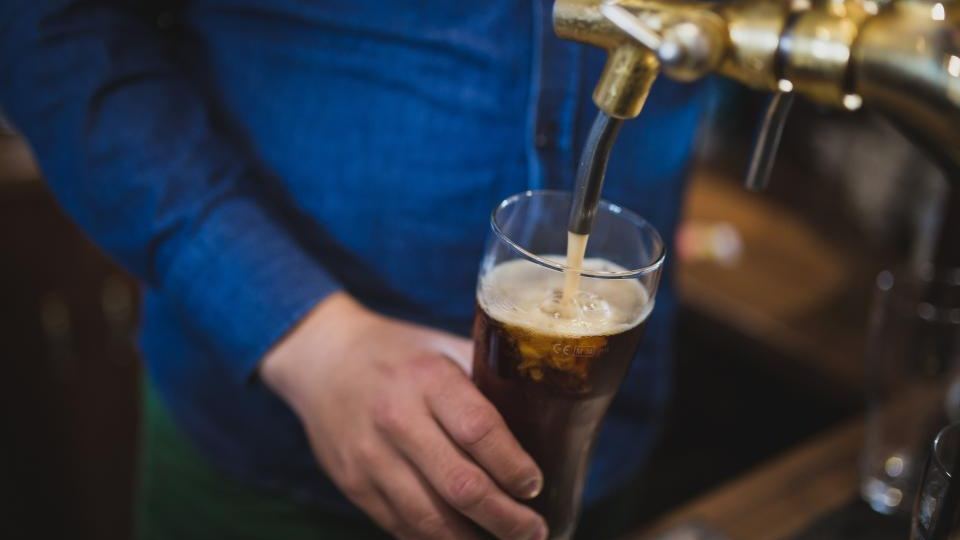
A pub that takes on a 17-year-old glass collector and a 20-year-old bar person pays them at different legal rates, rosters them under different rules, and may serve alcohol through them only in certain ways. The cost gap is large enough to change who you hire for which shift.
This guide covers England and Wales for the licensing rule. The pay and working time rules apply across Great Britain.
The three rates from 1 April 2026
GOV.UK lists the National Minimum Wage and National Living Wage from April 2026 as:
| Age | Hourly rate |
|---|---|
| 21 and over | £12.71 |
| 18 to 20 | £10.85 |
| Under 18 | £8.00 |
| Apprentice | £8.00 |
The next change is on 1 April 2027. A person must be at least school leaving age to be entitled to the minimum wage. An apprentice gets the apprentice rate if they are under 19, or 19 or over and in the first year of the apprenticeship. After that they move to the rate for their age.
These rates are a legal floor, not a target. Many pubs pay everyone the same rate for the same job, and that is a choice for the owner.
What one 20-hour week costs, by age
Employer National Insurance is 15% on earnings above £96 a week for 2026 to 2027. For employees under 21, GOV.UK gives an upper secondary threshold of £967 a week, so no employer National Insurance is due on a bar wage for someone under 21. Apprentices under 25 get the same relief. Pension and holiday pay are left out of the table below so that the comparison stays simple; our rota cost calculator adds them.
| Worker | Pay for 20 hours | Employer NI | Cost a week |
|---|---|---|---|
| Under 18 or apprentice | £160.00 | £0.00 | £160.00 |
| 18 to 20 | £217.00 | £0.00 | £217.00 |
| 21 or over | £254.20 | £23.73 | £277.93 |
The 21 or over line works out as (£254.20 minus £96) at 15%, which is £23.73. For a person on 20 hours the birthday step is £60.93 a week, or £3,168.36 over 52 weeks, because the pay rate rises by £1.86 an hour and employer National Insurance begins at the same time.
If a 20-year-old is on your team, put their 21st birthday in the diary a few weeks ahead so that the new rate and the National Insurance are in the payroll for that week. The new starter checklist is the place to record their date of birth.
Hours limits for 16 and 17 year olds
GOV.UK says that if you are under 18 you cannot work more than 8 hours a day or 40 hours a week. There is no opt-out. A week of 5 shifts of 8 hours reaches the limit exactly, so a double shift or a staff meeting that overruns can break it.
On rest, a young worker has:
- a 30 minute break if they work more than 4.5 hours, taken as one continuous break if possible;
- 12 hours of daily rest;
- 48 hours of weekly rest.
If a young worker misses rest because of an emergency where no adult is available, they must get equivalent compensatory rest within the following 3 weeks.
On nights, GOV.UK says 16 and 17 year olds cannot work between midnight and 4am, and usually cannot work between 10pm and 6am. A hotel or catering job is one of the sectors where the 10pm to 6am limit does not apply, so a 17-year-old can be on a late pub shift, but the midnight to 4am bar remains. Adults get 20 minutes if they work more than 6 hours; our bar staff rota template shows both sets of checks in one table.
Who may approve a 17-year-old's pint
Section 153 of the Licensing Act 2003 makes it an offence for a responsible person to knowingly allow someone under 18 to make a sale of alcohol on the premises without specific approval from a responsible person. In practice the responsible person is the premises licence holder, the designated premises supervisor, or an adult of 18 or over they have authorised. The offence carries a fine of up to level 1 on the standard scale.
There is an exception for alcohol sold for consumption with a table meal, in a part of the premises used only for that. A 17-year-old waiter in a dining room is outside the rule, and the same person behind the bar is inside it.
The approval has to be specific to each sale, so a blanket line in the staff handbook is not the safest answer. Many licensed venues write approval into the till process, such as a supervisor's key or a button press for each sale, so that each approval is on record. Which method you use is for you and your licensing authority to settle. Our guide to which licence a pub needs shows where the premises licence and the designated premises supervisor sit.
Tips and the wage floor
Tips are separate from the wage floor. Our guides to National Insurance on tips and service charge and the tips law explain how tips are handled.
Checklist before the first shift
- Record the date of birth and check the rate that applies on each pay date.
- Mark the 21st birthday on the payroll calendar.
- For under 18s, cap the rota at 8 hours a day and 40 hours a week, with a 30 minute break past 4.5 hours.
- Keep under 18s off the rota between midnight and 4am.
- Record who may approve their bar sales, and how each approval is made.
- Check whether the person is an apprentice, and when the first year ends.
Overlyft  can set up an AI assistant that flags each young worker's birthday, checks a draft rota against the 8 and 40 hour limits and the midnight to 4am bar, and hands the result to a manager to approve.
This is general information, not legal advice.
Where this comes from: GOV.UK, National Minimum Wage and National Living Wage rates, and Who gets the minimum wage, read 5 October 2026; GOV.UK, Employer rates and thresholds 2026 to 2027, read 5 October 2026; GOV.UK, Maximum weekly working hours, Rest breaks at work (young workers), and Night working hours, read 5 October 2026; Licensing Act 2003 section 153 on legislation.gov.uk, read 5 October 2026.
AEO Lookup editorial team
We write practical guides for people who run small UK firms, and we check every fact against its source on the date shown. Read how we review, or tell us if something has changed.